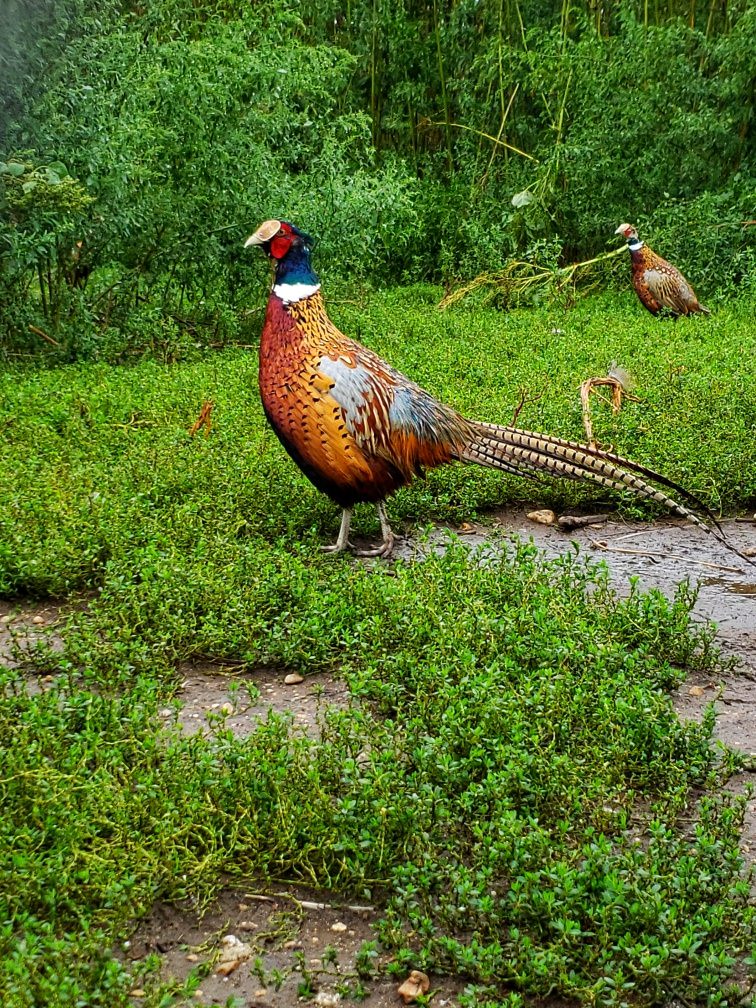
Photo: MacFarlane Pheasants (pheasant.com)
Quail
Small, fast-growing game bird requiring specialized equipment.
Overview
Quail are very small and fast-growing. They require specialized equipment and careful management.
Chick Setup
Set up brooder 24 hours ahead. Pre-heat to 100°F. Use dried pine shavings (kiln-dried, dust-free, about 1 inch in size) for the first 3 weeks (cover with brooder paper for week 1), then wheat straw when moved to a bigger space. Provide small feeders and waterers with marbles or gravel to prevent drowning.
Temperature
Start at 100°F (day 1). Reduce by 5°F each week until reaching 75°F.
Feed Stages
Days 1-6: Starter crumb (28-30% protein). Weeks 2-6: Grower (20-24% protein). Week 7+: Conditioner (16% protein).
Water Requirements
Use very small waterers. Add marbles or gravel to prevent drowning. One waterer per 50 chicks.
Lighting
24 hours light for first 3 days. Then 16 hours. Keep light dim.
Stocking Considerations
Week 1: 0.1 sq ft per bird. Week 3: 0.25 sq ft per bird. Week 6: 0.5 sq ft per bird.
Common Behavior
Quail are very active and fast. They are sensitive to drafts and temperature changes.
Moving Outside
Move outside around day 35. Quail are small and need protection from predators.
Adult Bird Considerations
Adult quail need 1-2 sq ft per bird. They are small and need fine-mesh fencing.
Milestones
Common Mistakes
- Water too deep — drowning risk
- Feed too coarse
- Temperature too low
- Overcrowding
Common Health Concerns
- •Drowning
- •Starve-out
- •Pasting
- •Piling