Educational guidelines only. This information must never replace advice or guidance from a registered veterinarian. It is not a diagnosis or treatment plan. If birds are unwell, contact your veterinarian and do not delay care to complete a lesson.
Pheasant foundations
Brooder Lab
Explore real equipment, compare setup levels and practise what to check.
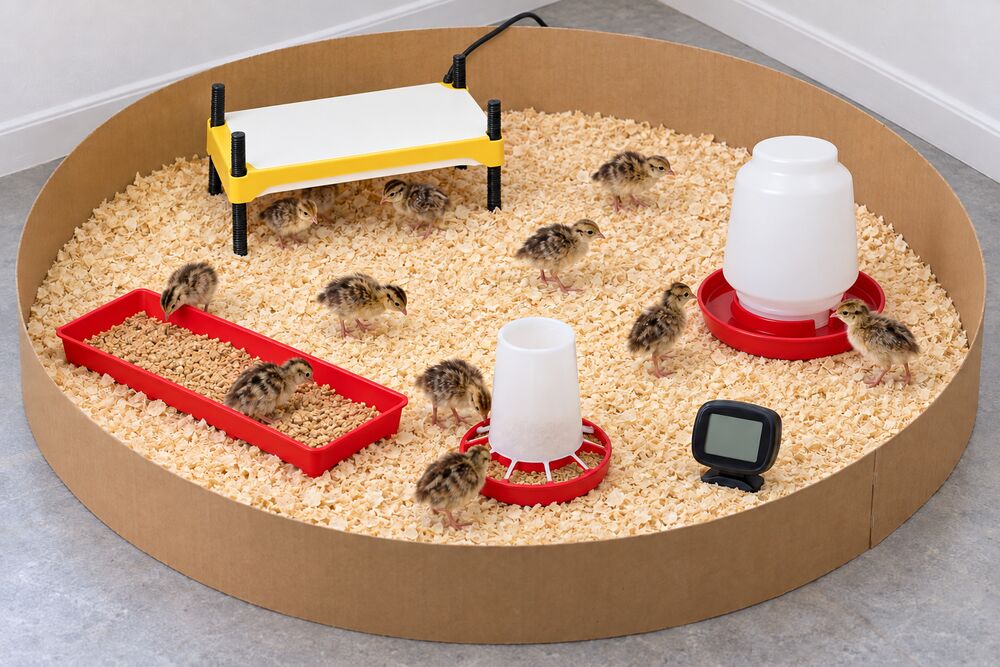
A simple, supervised small-flock setup. Choose a brooder plate or a suitable heat lamp; the scene shows a plate. Manual feeding, water checks and local temperature readings remain essential.
AI-generated educational illustration. Equipment placement, sizes, sensor locations and bird numbers are conceptual—not an installation plan or stocking recommendation. Display graphics are illustrative, not live readings.
Keep it simple, keep checking. Choose one heat source matched to the flock and room. The flat supports early feeding; the tube feeder is a transition option. Maintain fresh water, suitable bedding, a cooler area and adequate ventilation. Compare temperature at several chick-level locations, observe birds and have a heat-failure plan. A guard must not trap chicks in excessive heat or seal fresh air out.
Basic equipment list · heat lamp or plate
Brinsea EcoGlow Safety 600
Electric brooder plate
An electrically heated low panel provides a warm underside; chicks move under it and away from it. Legs adjust its height.
Use & checks
Small-flock product with manufacturer ambient-temperature and capacity limits. It does not heat an entire barn.
A stable temporary guard defines a small early brooding area. It is one layout option, not a requirement for every farm.
Use & checks
Preserve a cooler area, ventilation and equipment clearances. Replace soiled or wet cardboard. MacFarlane’s published barn practice uses lighting rather than rings.
Displays local temperature and relative humidity without a barn controller or remote alarm service.
Use & checks
A basic local measurement example. Compare readings at chick level in more than one location. Keep it clean and dry; a display alone cannot assess the whole brooder.